Sensitive content
This site contains sensitive content that includes references to sexual violence.
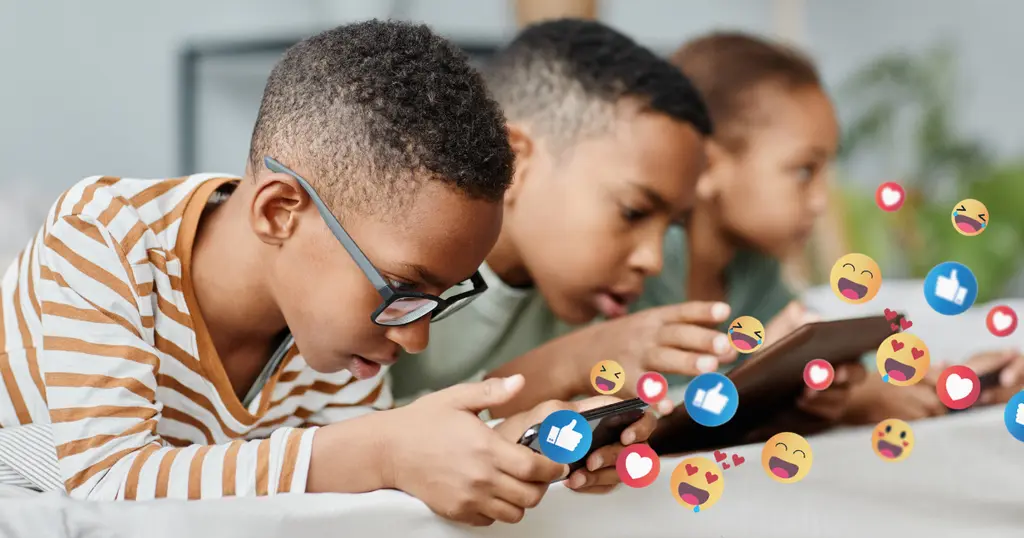
The global survivor-led Brave Movement is calling on tech companies and government regulators to urgently act on the findings of a new 21-country report from UNICEF. The report estimates that 20 million children across 21 countries experienced technology-facilitated sexual exploitation and abuse in a single year, including exposure to unwanted sexual content, coercion to engage in sexual conversations or share sexual images against their will, and non-consensual sharing of sexual images. The true scale is likely even greater, with many cases going unreported.
Daniela Ligiero, chief executive officer of Together for Girls and founder of the Brave Movement, says:
Every day, members of the Brave Movement tell us just how pervasive online harm has become for children around the world, and how profoundly devastating the consequences are. It’s shocking, but sadly not surprising, that one in five children across such a wide range of countries experienced sexual exploitation and abuse using technology in a single year.
What is enraging is that we know this harm can be prevented. The evidence exists. The solutions exist. And yet they are not being put into practice.
In many countries, including some of the countries most heavily involved in the distribution and hosting of child sexual abuse material, Internet Service Providers are not required to report it.
One in three countries still do not criminalize online grooming for sexual purposes. And where grooming is criminalized, laws are often incomplete, inconsistent, or poorly defined.
We cannot keep calling this an inevitable consequence of technology moving faster than the law. It isn’t inevitable. We know what works. We have the evidence. What’s missing is the will to apply it.
Tech companies must build protection measures into their products and services from the ground up, not bolt them on after children are harmed. And governments must hold tech companies, Internet Service Providers, and perpetrators accountable.
Our children should not have to pay the price for leaders’ failure to act.
Brave Movement advocates weigh in on the issue:
Juliet Ohahuru-Obiora, Nigeria
“It is heartbreaking that fewer than 1% of experiences noted in the UNICEF study were reported to authorities. Reporting mechanisms must be visible, confidential, child-friendly and connected to timely protection and support. In multilingual settings such as Nigeria, this requires Nigerian-language and Pidgin English options, voice-enabled, low-data channels, and accessibility for children with disabilities. Every child must know where to report, be able to report in a language and format they understand, and receive a compassionate and effective response.”
Noor Rehman, Pakistan
“We are carrying the risk in our pockets. When I talk to parents as a child activist, often they don’t even know how to use the parental controls. Children as well need to be oriented to know that it’s not ok for someone to ask to take photos of their private parts. But funding cuts have contributed to reduced resources, so services to do this education are not available. We are seeing many cases of families being extorted, or videos being sold on the dark web. And yet the conviction rate for cyber crimes in Pakistan is around 3%; it must be taken more seriously.”
Leah Juliett, United States:
“As a survivor of technology-facilitated sexual abuse, I know that the harm does not end when you close an app or put down your phone. The pain of online exploitation is fervent and forever.
“Corporations have spent far too long asking children and survivors to protect ourselves from systems that were never designed with our safety in mind. The responsibility for preventing harm belongs with the tech companies and institutions that have the power to change those harmful systems.”
Notes for editors: Visit the 2026 Out of the Shadows Index, researched and developed by Economist Enterprise, for more information on countries’ laws, policies and systems.