Sensitive content
This site contains sensitive content that includes references to sexual violence.
"As the world prepares for the Second Global Ministerial Conference on Ending Violence Against Children in Manila, the question is no longer whether young people should be included. The real question is whether we can afford to build child protection systems without them."
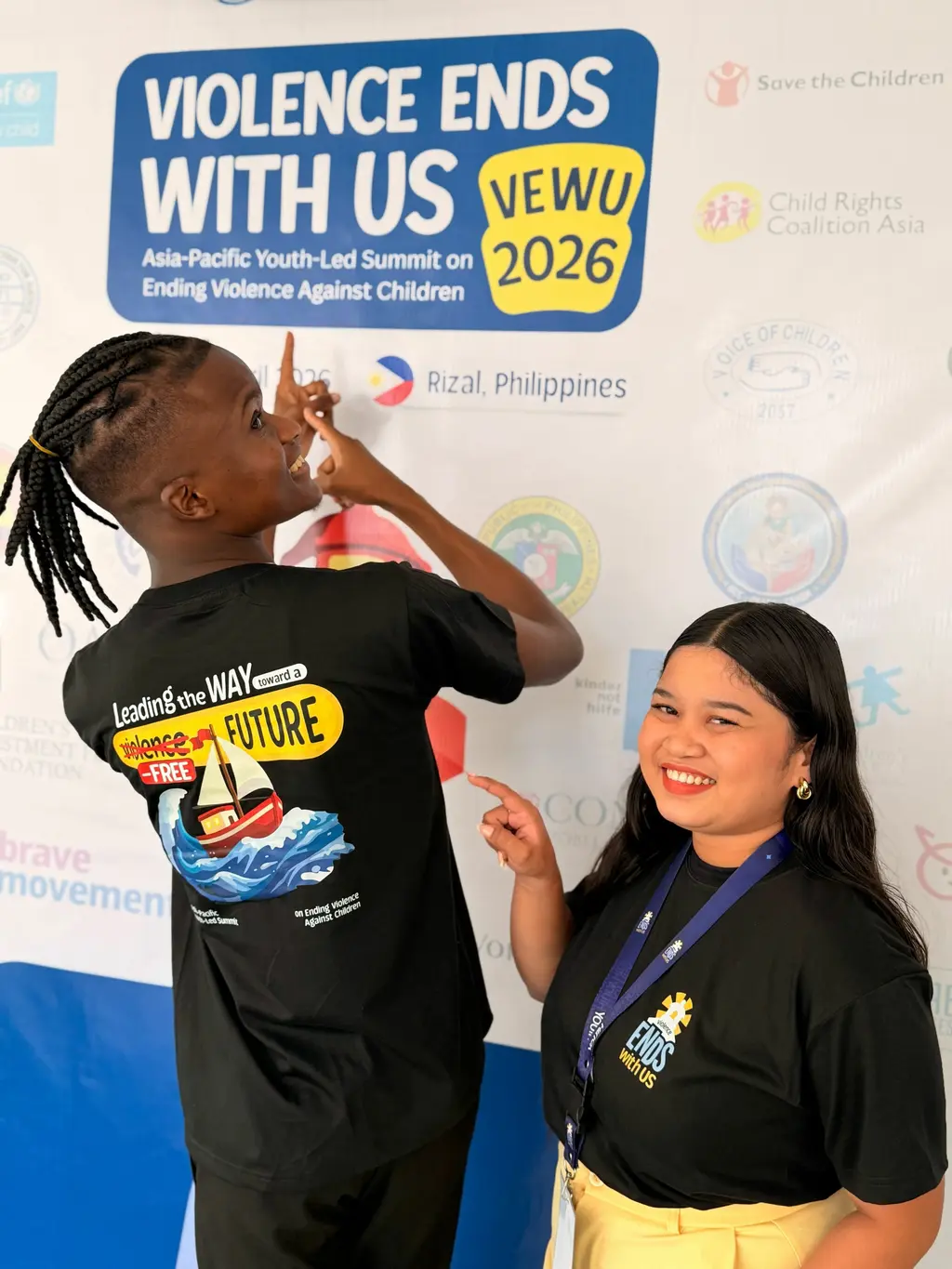
My journey from Nairobi to Manila for the Violence Ends With Us Youth Summit in the Philippines in April 2026 took far longer than expected. Conflict between the United States and Iran - thousands of kilometers away - had reshaped flight routes across the world. To reach Manila, we took the safest path, which was also the longest.
That journey was a reminder that violence and instability are never abstract. Decisions made far away can alter lives, opportunities, and safety in ways that are often invisible until they are experienced firsthand. Children and young people know this reality better than most.
My expectation for the summit in Manila was therefore simple but firm: that the summit would prove that youth participation is not symbolic inclusion. It is system correction. With the Second Global Ministerial Conference on Ending Violence Against Children on the horizon, I expected that the Summit would show that young people are not simply participants in conversations about violence against children - we are partners in shaping the solutions.
The Summit brought together young leaders to explore four pressing issues affecting children today: online child sexual exploitation and abuse, corporal punishment, child labor, and child marriage. More importantly, it challenged us to move beyond discussing these issues and towards influencing the policies and systems designed to address them.
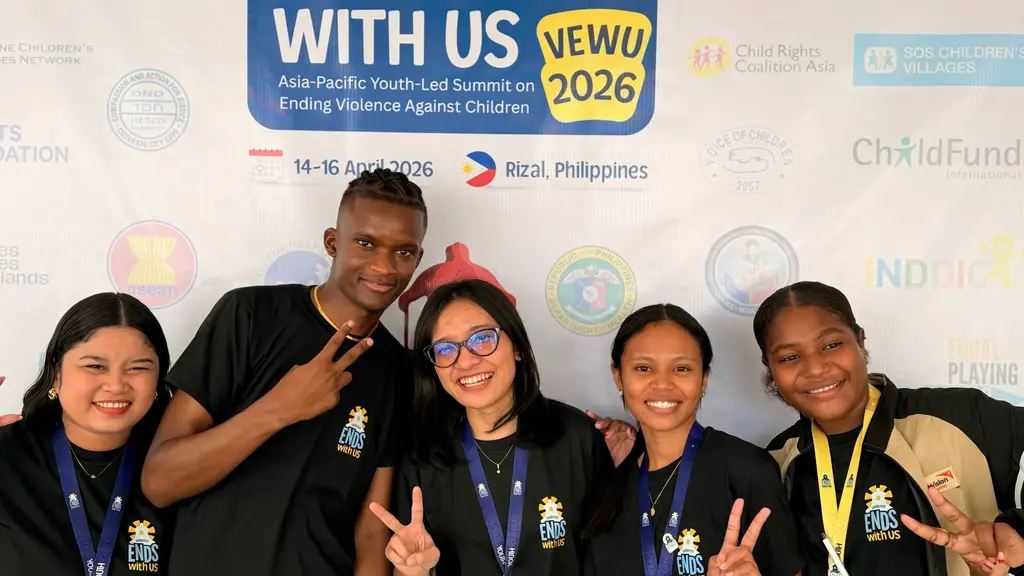
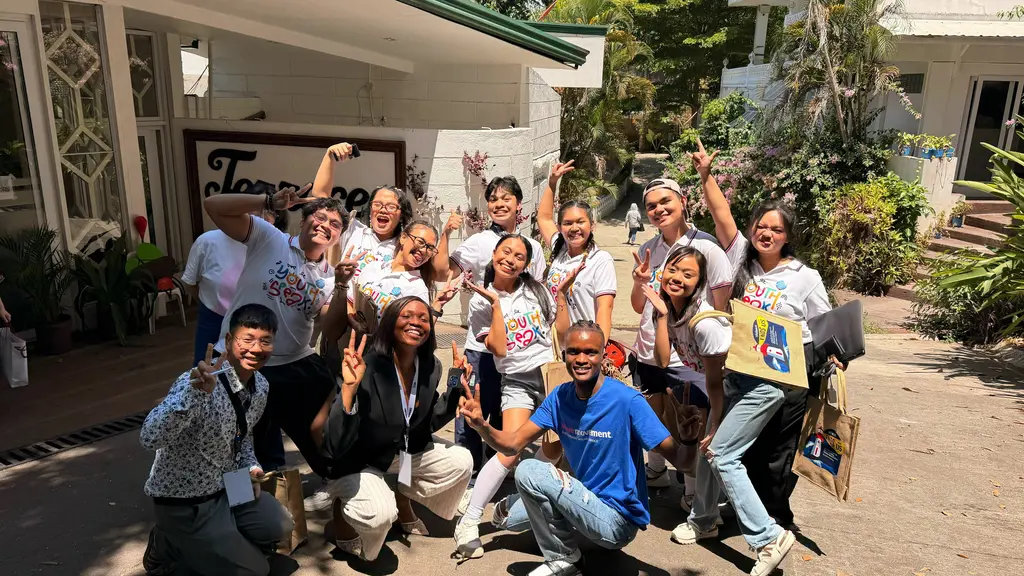
Many youth events create space for young people to speak. This Summit created space for young people to lead.
The summit functioned less like an event and more like an ecosystem. Like a self-sustaining farm, it allowed ideas, experiences, and ambitions to cross-pollinate and strengthen one another. No single voice dominated the space; instead, collective intelligence shaped outcomes greater than any individual contribution.
Over three days, discussions evolved into shared priorities and youth-led solutions, with selected initiatives receiving seed funding for implementation beyond the Summit and a promise of a more inclusive Second Global Ministerial Conference on Ending Violence Against Children in Manila.
For me, this represented an important shift. Youth engagement was not treated as a symbolic box to tick. It became part of how solutions were developed.
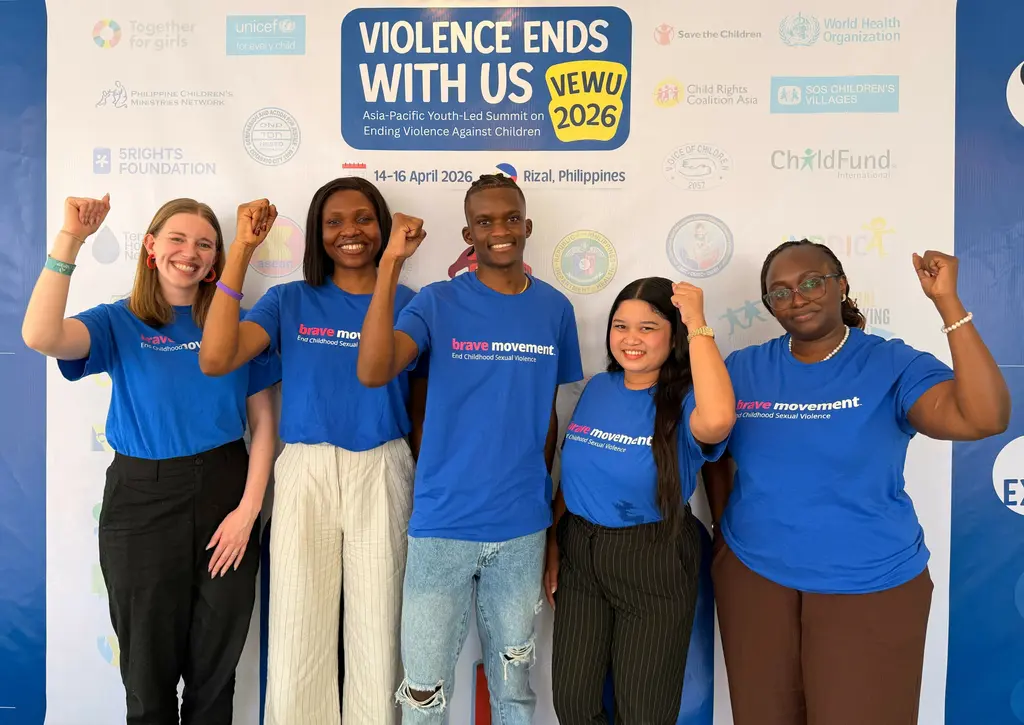
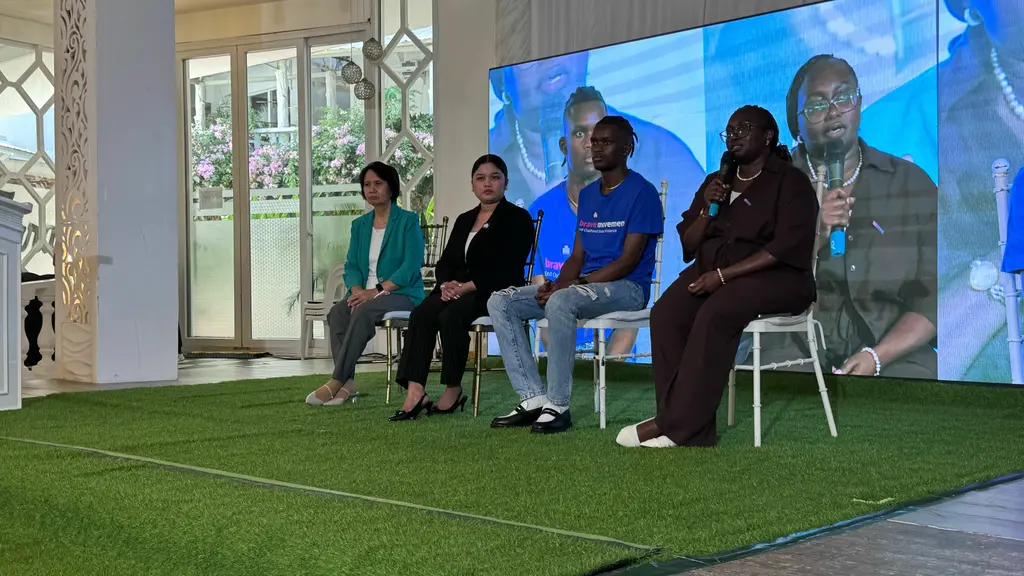
As a member of the Brave Movement, I arrived at the summit with another deeper conviction: survivor leadership is not symbolic, it is structural. It humanizes data that is too often stripped of identity. In Manila, the Brave Movement delegation advanced a simple but powerful idea: child protection systems are weakest when lived experience is excluded from their design.
As a youth Brave Movement member, I understand the scale of violence against children and carry a firm conviction that survivor leadership is what gives meaning to data. Without it, violence becomes statistics without identity, and systems become technically informed but emotionally detached from reality.
This perspective was reflected in discussions around the Out of the Shadows Index, a global benchmark that measures how governments are responding to sexual violence against children and adolescents. While the Index provides valuable evidence, our conversations focused on something equally important: how evidence can drive action, and how that action should be informed by the voices of those with lived experience.
One of the highlights for me was our session on trauma-informed and survivor-centered advocacy - co-created by the International Justice Mission and members of the Brave Movement, and led by the Deputy Director for Membership, Movement Building and Safeguarding. This session demonstrated what survivor-centered leadership looks like in practice.
Reflecting on the trauma-informed and survivor-centered advocacy session, one lesson became impossible to ignore: effective child protection depends on three forms of knowledge working together: Evidence informs. Professional expertise guides. Lived experience challenges assumptions and keeps systems grounded in reality.
Remove any one of these, and protection systems become weaker.
The summit reinforced this idea by putting in place carefully safeguarded spaces for young people to contribute meaningfully without feeling that their experiences were being extracted. Participation was supported, protected, and valued.
That is what it means to build protection systems with survivors, not for them.
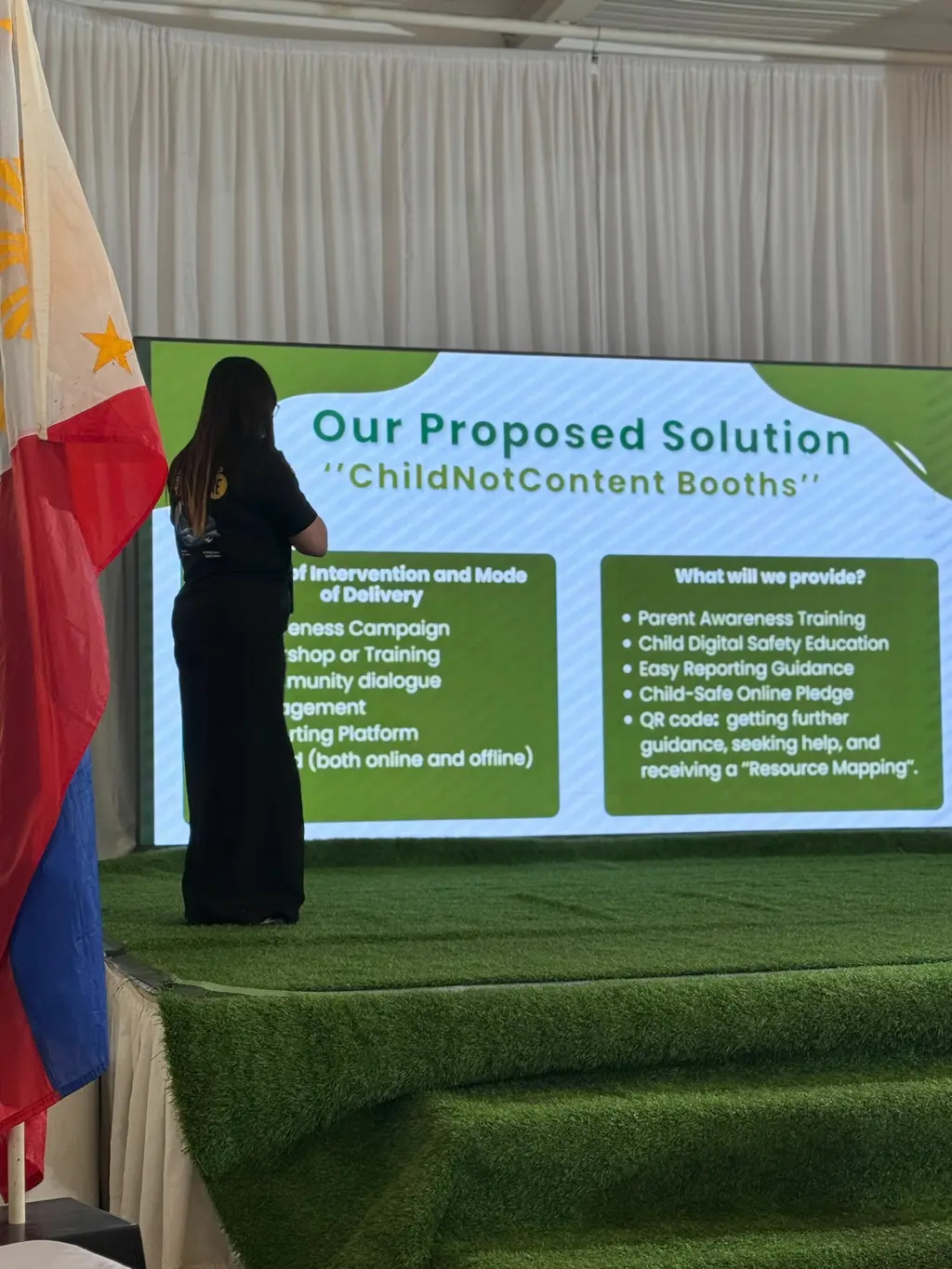
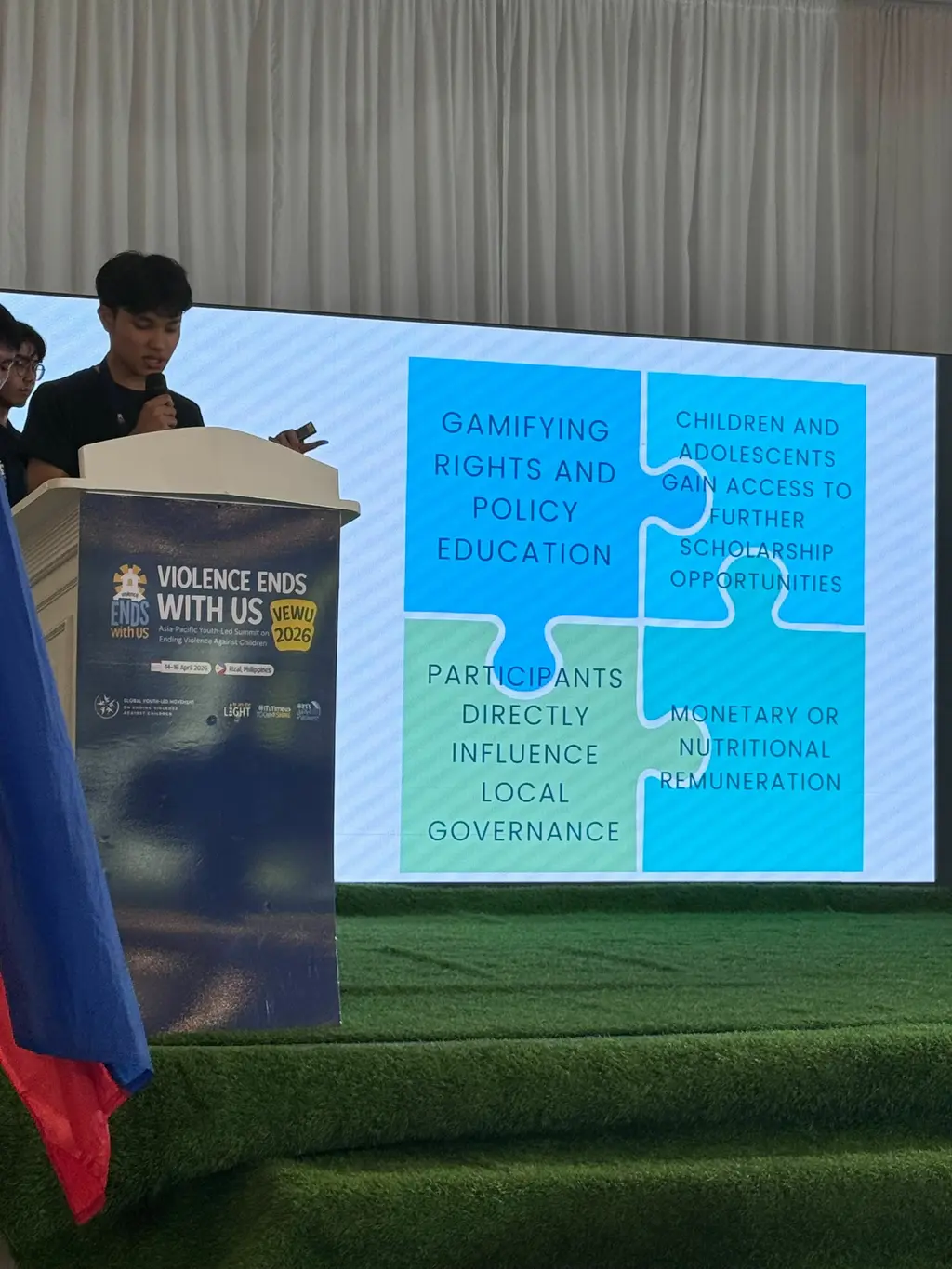
Day one established a shared understanding that violence against children is not fragmented but systemic. Across discussions on child labor, child marriage, corporal punishment, and online child sexual exploitation and abuse, young people moved from consultation to ownership. This culminated in the development of a Regional Youth Agenda, a youth-authored Call to Action shaped by delegates from 23 countries across the Asia-Pacific.
As conversations deepened, difficult truths surfaced.
Corporal punishment was exposed not as discipline but as violence sustained by familiarity. Online child sexual exploitation and abuse emerged as one of the most urgent challenges facing children today, with youth voices making it clear why young people must be part of designing solutions for digital safety. A powerful participatory performance on corporal punishment brought these issues into sharp focus, leaving many of us reflecting on a simple but uncomfortable question: how many systems persist not because they are right, but because they are familiar?
By the final day, the Summit shifted from dialogue to execution. Youth-led teams entered a structured hackathon designed to refine solutions under real-world constraints. Ideas were tested not for creativity alone but for feasibility and implementation strength. Those that survived that process received seed funding to support development ahead of the Second Global Ministerial Conference.
The Violence Ends With Us Youth Summit was more than a standalone event. It was an important step towards the Second Global Ministerial Conference on Ending Violence Against Children.
It also reflected a broader shift in global leadership.
By 2050, most of the world’s children will be in Africa and Asia, which together will account for the overwhelming majority globally. That demographic reality is not distant; it is already reshaping how child protection must be understood and prioritized.
This perspective reminded me of another moment I witnessed a year earlier during South Africa’s G20 South African Presidency when children read out the declaration directly to President Ramaphosa. In both that moment and this Summit leading toward the Second Global Ministerial Conference in Manila, a clear shift is visible: the Global South is no longer only positioned as a recipient of global policy, but as an active architect of child protection agendas.
The same is true within the Brave Movement. It recognizes survivor voices not as symbolic participation, but as expertise that must inform systems design and decision-making.
At the same time, the summit made one reality impossible to ignore. Violence against children is evolving rapidly in the digital age. Online child sexual violence is not emerging; it is accelerating. It is now one of the fastest-expanding forms of harm, driven by systems that evolve faster than regulation and protection frameworks can keep pace.
The greatest challenge young people face is not silence. It is fragmentation. Efforts exist, but they remain disconnected across institutions, funding streams, and national systems. The result is repetition without scale and action without consolidation.
What must change is not awareness. It is architecture.
Governments must move from consultation to institutionalized youth co-leadership in child protection systems. Young people should not be invited into conversations after decisions have already been made. Their expertise should be embedded in policy design, implementation, and accountability from the beginning.
Anything less simply reproduces the same failures at greater cost.
The Summit confirmed that the world already knows enough to act. What is missing is not evidence, but alignment, urgency, and the willingness to share power with the people most affected by the decisions being made.
Violence is not our language as young people, it therefore has to end with us.
As the world prepares for the Second Global Ministerial Conference on Ending Violence Against Children in Manila, the question is no longer whether young people should be included. The real question is whether we can afford to build child protection systems without them.