Sensitive content
This site contains sensitive content that includes references to sexual violence.
"The data is clear: childhood sexual violence is preventable. The question is not whether we can act, but whether we will."
Two years ago, over 100 governments came together in Bogotá, Colombia, to acknowledge the global scourge of violence against children, and pledge publicly to address it. This was the first time that child protection was the sole focus at a high-level ministerial conference. It even broke a Guinness World Record for the most countries represented at a childhood violence summit. Hopes were high that these pledges would spark concrete action to protect children worldwide.
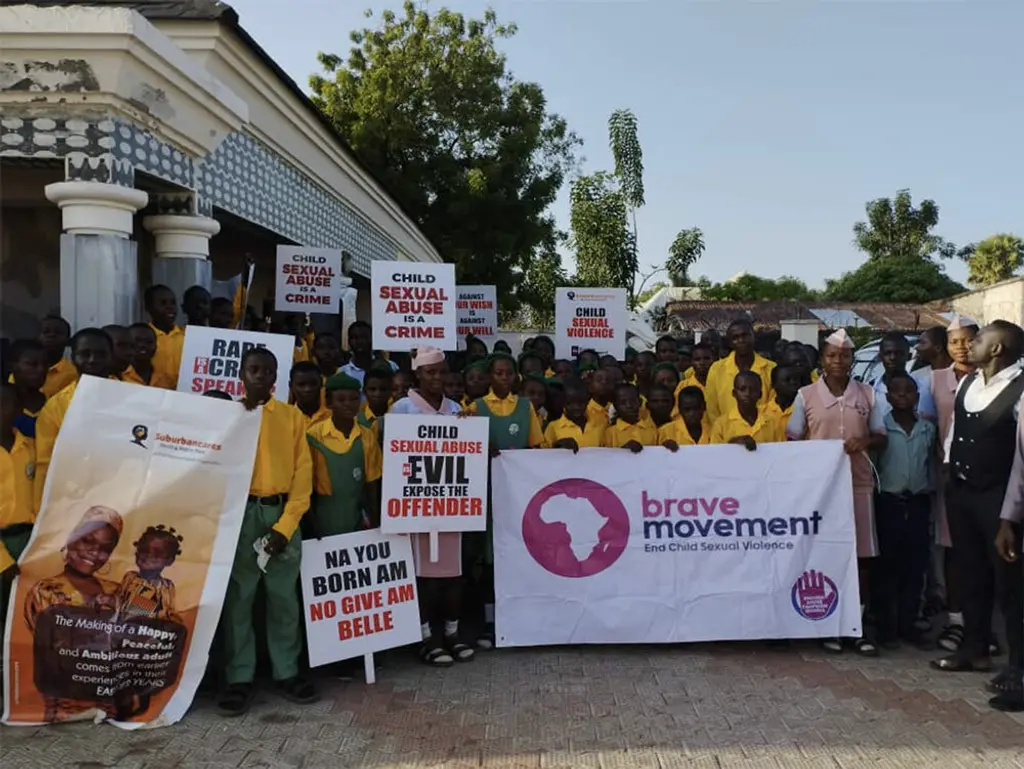
In the intervening time, advocates – including many members of the Brave Movement – have pushed governments to live up to their commitments, resulting in major successes.
But many countries are still falling short. Two years after the Bogotá conference, the 2026 Out of the Shadows Index (researched and developed by Economist Enterprise, with advocacy led by Together for Girls), which measures how governments are preventing and responding to childhood sexual violence, found that the average score across 60 countries was just 53 out of 100.
The solutions outlined in the Out of the Shadows Index are foundational policy requirements proven to be effective. They include steps such as training health providers to recognize and respond to sexual violence, background checks for adults working in direct contact with children, and reforming statutes of limitations so survivors who come forward later in life can still seek justice – and prevent further abuse.
If governments choose to commit to, fund, and follow through on what we know works, more children will grow up safe.
This November, governments from around the world will again gather – this time in Manila, the Philippines – for the second Global Ministerial Conference on Ending Violence Against Children. They once again will have an opportunity and a responsibility to turn decades of evidence into decisive action against childhood sexual violence.
Out of more than 100 countries that made pledges in the first Ministerial, 64 countries have reported progress and 165 pledges are completed or on track. The efforts of Brave Movement members contributed directly to the delivery of the pledge to create a National Survivor Council in France and the pledge to improve school safety in Tanzania.
These countries and others making and keeping their commitments know that it’s in their own best interest. Not only does investing in prevention work for children; it is a game-changer for economies. In just one example, a $1 million investment in an app to support parents in preventing violence in Tanzania generated US $19 million in savings on health and social services in just one year.
And this is not an isolated example. Studies have proven that for every dollar invested in child protection, economies gain up to $21 in economic and social benefits.
Starting today, all eyes are on the governments coming to Manila. And there are four commitments governments cannot leave the Philippines without making:
"The evidence exists. The solutions are at our fingertips. In Manila, there should be no more excuses."
The conference this November is more than another international meeting. It is a defining moment for governments to move beyond promises and make ambitious, measurable commitments backed by funding, accountability, and implementation.