Sensitive content
This site contains sensitive content that includes references to sexual violence.

"For us, art is a way of connecting with people through emotion, asking difficult questions, and moving people toward action."
Renmark Deblatan is a member of the Global Survivor Council from the Philippines. They are a youth advocate who uses the power of art to educate and advocate for children’s rights. Their organization works to eliminate corporal punishment, promote meaningful child and youth participation, and protect civic spaces in the Philippines.
Below, Renmark shares what brought him to this work, what inspires him every day, and how they support young people globally to become leaders in their communities.
I’m the President and Co-founder of Lunsad Kabataan. We are a group of artvocates; advocates who use the power of the arts to push for the elimination of corporal punishment, promote meaningful child and youth participation, and protect civic spaces.
Arts are at the center of almost everything we do.
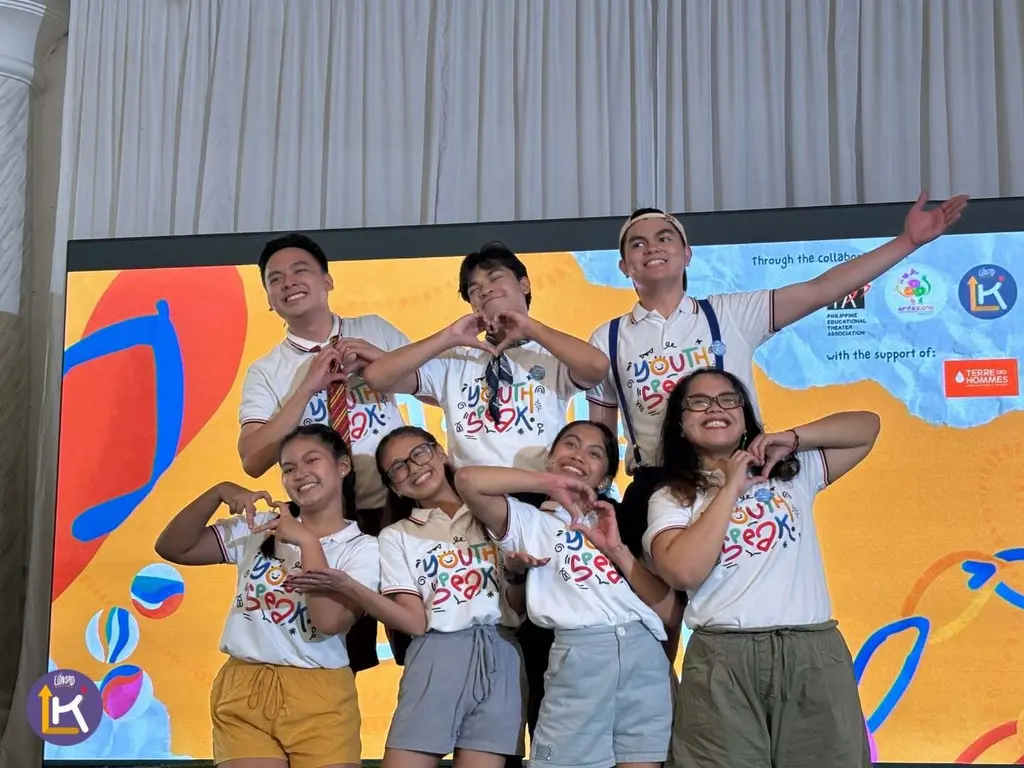
At the international level, I am also involved in grant-making and funding for youth-led initiatives. The current development and philanthropy landscape is quite unstable, and communities feel the effects of that instability directly. Young people are among those most affected, but they are also already responding in creative and meaningful ways. This is why I think it matters to involve young people who are grounded in community realities in conversations about where resources should go and what kinds of work need the most support.
My role also goes beyond funding. I check in with young people throughout their projects, support them when challenges come up, amplify their work on social media, and look for other ways to strengthen what they are doing. It is a huge responsibility, but once I understand the project and get to know the people behind it, I naturally become invested in seeing the work succeed.
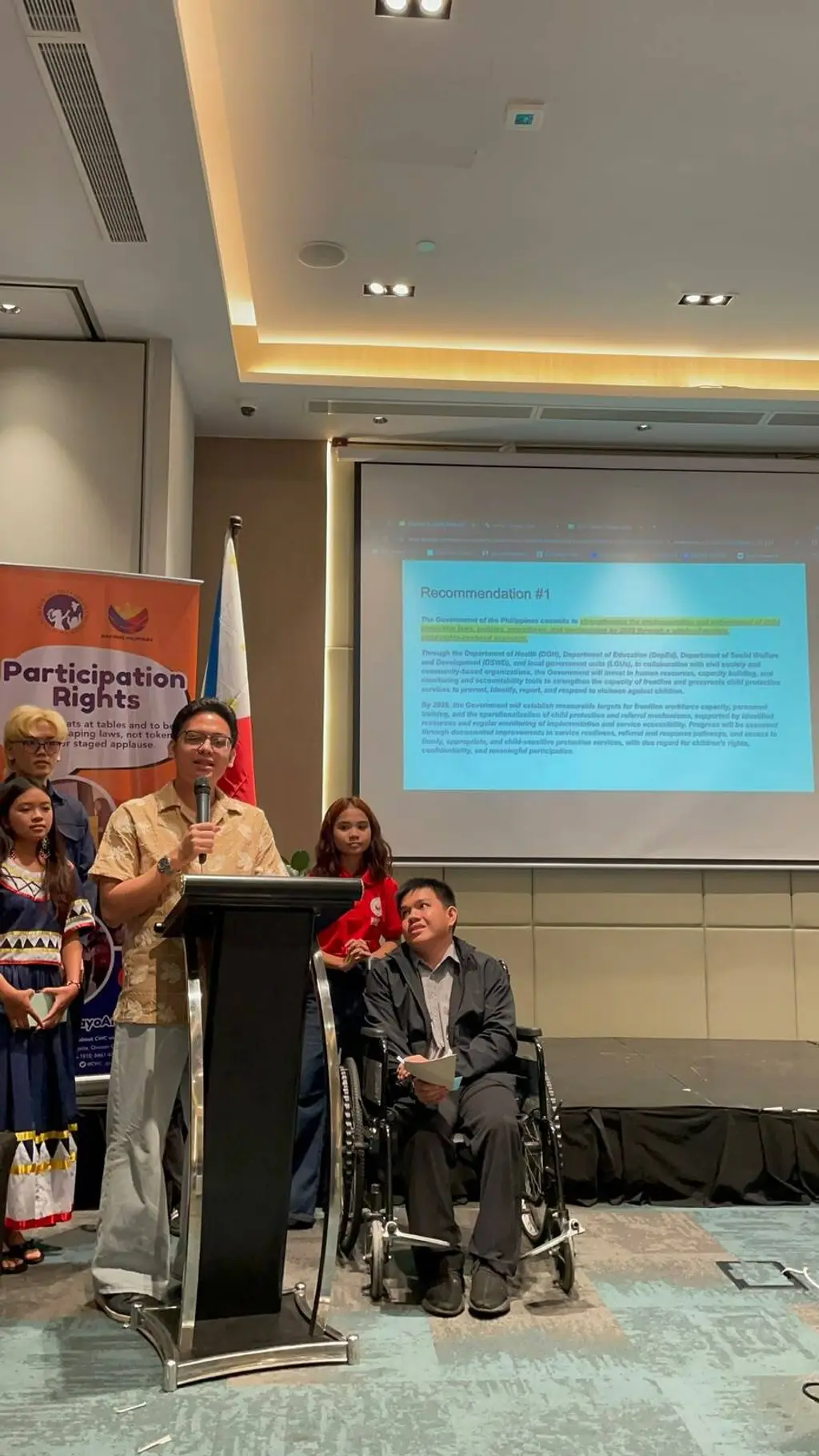
At the community level, because our initiatives are strongly rooted in arts-based approaches, one of the most meaningful evidence of impact is seeing children and young people become more comfortable sharing their experiences and realizing they have agency.
Our partners have also begun to see how arts-based methodologies can create a different, more meaningful space for engagement. Compared with more conventional approaches, where children are often expected to sit through formal presentations or communicate in ways that feel overly professional, the arts allow them to participate in ways that feel more natural, expressive, and closer to how they actually experience the world.
In my work in grant-making, it is equally meaningful to see young people turn their ideas into something real. Small initiatives are often overlooked, even when they carry meaningful impact, because young people are usually expected to prove themselves first before they are trusted with resources
"What I value is that these projects not only create impact outside of themselves. They also become spaces where young people can build their skills, test ideas, explore what is possible, make mistakes, reflect on those, and learn to be accountable for the work they lead."

"I wish I had recognized earlier that being young did not mean I had less right to question the systems around me."
In a culture where children are often seen as less capable, a young leader can easily find their actions being shaped or controlled by adults, whether intentionally or unintentionally. This becomes even more difficult when young people are operating within structures and systems that are designed almost entirely around adult expectations.
A young leader may be asked to submit an overwhelming amount of paperwork for a very small project. They may feel like they have to think, speak, and behave like adults simply because it has to be that way.
Looking back, I wish I had known that I was allowed to play with ideas, explore, experiment, and figure things out before being expected to formalize everything.
I had the power to pursue the things I believed in, to challenge what did not make sense, and to resist the idea that adults should always have the final say simply because they were adults.

When I was six years old, I was playing a Filipino game called Patintero with my friends. The game requires players to cross the grid without getting tagged by the stationed players. I was about to hop onto the other side, which was heavily guarded. However, I got distracted when a younger child fell off his bicycle. While my teammates were ‘booing’ me because we lost, I approached and helped the child, assisting him in standing up and retrieving the bike. His mother thanked me while rocking her other child in her arms.
This is a memory I still remember and always will; it was the first time I remember helping other people. In that moment, I realized that dedicating myself to helping others isn't just a choice—it's an integral part of who I am and what I stand for.
I do not tell that story to position myself as some kind of hero. What stays with me is the feeling behind it. There is something deeply meaningful about being able to create something with other young people while knowing that, in some way, the work is also making life a little better for the people and communities around us.
That feeling continues to inspire me.
I hope national governments recognize that children, young people, and survivors are not only people to consult or protect. Many of us are already active partners in ending violence against children.
There are already many child-led and youth-led initiatives doing meaningful work in their own communities. I hope governments recognize these efforts as seriously as they recognize institution-led initiatives, and that they see young people not simply as beneficiaries, but as people with knowledge, experience, and ideas that can shape solutions.
I also hope governments learn to trust young people more.
"We understand many of the realities we are living through because we experience them directly, and that perspective deserves to be part of decisions that affect our lives."
Recognition is important, but it is not enough. Child-led and youth-led initiatives also need financial support, resources, access, and genuine partnership if governments truly want young people to be part of the solution.