Sensitive content
This site contains sensitive content that includes references to sexual violence.

Countries are doing only half of the bare minimum when it comes to having the policies, laws, programs, and services in place that are required to end sexual violence against children and adolescents. That’s what today's launch of the 2026 Out of the Shadows Index – researched and developed by Economist Impact, with Together for Girls leading its advocacy – reveals.
We know from the process of ranking 60 countries across 6 regions – home to 83% of the world’s children – that what we need right now, more than anything, is political will and leadership to end sexual violence against children and teens.
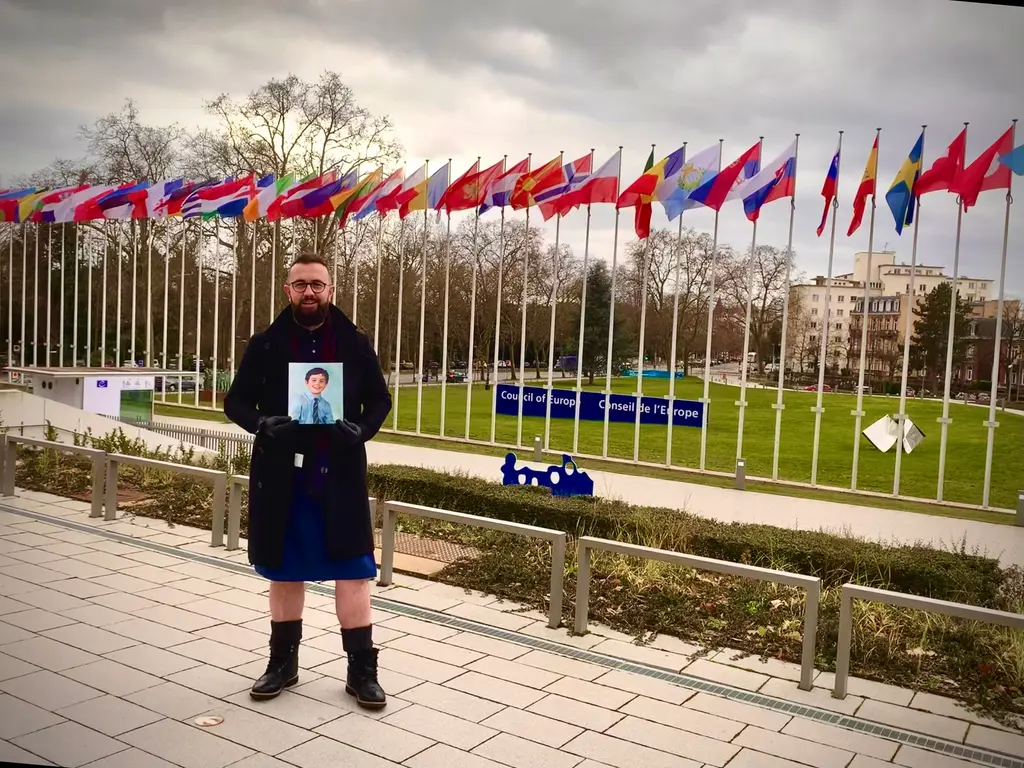
Check out the Brave member delegation, who helped launch the Index with Together for Girls at the World Health Assembly in Geneva, Switzerland.
"Passing laws alone is not enough to end childhood sexual violence. The Index assesses the existence of laws, policies, and programs in each country – not their quality of implementation – creating an essential foundation for advocates."
With this core framework, the Out of the Shadows Index is a powerful advocacy tool for Brave members to engage with your governmental officials. How?
1. Get informed: Go to the Index website.
2. Use the ready-made advocacy tools:
If national governments understand where they fall short in the Out of the Shadows Index, they can take actions to make significant progress toward eliminating childhood sexual violence. For that reason, policymakers and citizens alike can use it to identify gaps, drive national action and hold governments to account.
No country scored above an 83 out of 100, which means none fully provide the most basic safety measures for children and teens. This Index shows that wealth is not a determinant when it comes to child protection – countries do not have to be high-income to do well in setting effective policies.
For example, Colombia—an upper-middle-income country—ranks 8th, while lower-middle-income countries such as India, Vietnam, the Philippines, and Kenya also rank in the top 20 for their prevention and response efforts. Wealth alone does not predict which nations implement strong policies, but regardless of income, change does not happen without political will. That’s what our movement will build toward.
As we begin to use the Index, each of us will encounter obstacles. We’ll find ways it can be improved. The advocacy team at Together for Girls needs to hear from you – the activists. Share your experiences: the wins, the challenges, and what you need from us to make the Index a more powerful tool.
We have just short of six months to secure governmental commitments at the Global Ministerial Conference in the Philippines. Six months to push our leaders to do more and do better. In that time, we will elevate and call attention to the real-world implications these gaps have for children and adolescents around the world. We will make it clear what must be done to close those gaps.
Together, we will push our 60 nations and many more to make concrete commitments to drive a difference for millions of children around the world.