Sensitive content
This site contains sensitive content that includes references to sexual violence.
Brave Movement
"When a girl must choose between water and safety, the system has already failed her."
In the suburbs of Nairobi, a 9-year-old girl has been in a water queue for six hours. The sun is harsh, and the line barely moves; tempers rise and settle in cycles as people argue over who arrived first or who was skipped. Hunger sits quietly in her body, a familiar part of a routine that has transformed a basic need into a test of endurance.
By the time she finally reaches the front, she is met not just by the water she seeks, but by a predatory offer of "help" from a vendor who controls the most valued resource in her community. He tells her she can skip the six-hour wait tomorrow if she simply leaves her jerrycans and picks them up later - an enticing relief that quickly reveals its true cost when she is instructed to follow him into a private chamber to "pay" for this favor.
Incidents rates are hard to estimate accurately, as many local administrations and governments do not keep statistics on sexual assault or corruption at water points.
The BBC reports that tens of thousands of women and girls in Kenya are subjected to sexual extortion (sometimes referred to as "sextortion") to secure basic daily water rations. A landmark study conducted in Zambia by Transparency International, “Breaking the Silence Around Sextortion,” 57% of women surveyed had been forced to offer sexual favors to access essential needs.
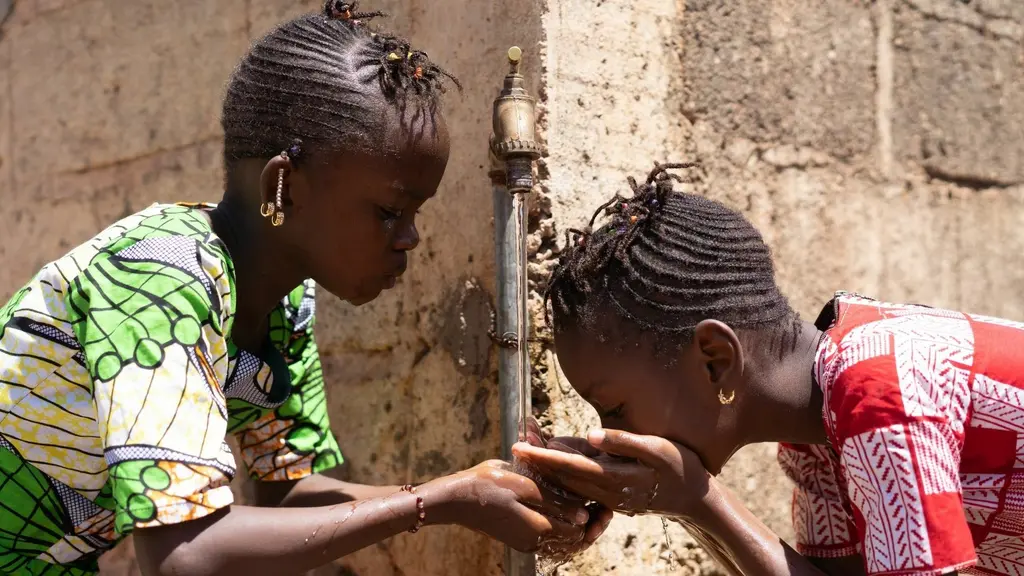
For millions of girls in low-and-middle-income countries, the search for water is a daily struggle. While water is abundant in nature – covering over half of our planet – the reality for many African children is shaped by the distance to it and the risks inherent in accessing it. In water-insecure regions, girls walk six to ten kilometers daily, spending up to six hours in transit.The heavy demands on children's time do more than limit school attendance; they create isolated corridors where exposure to harm is a constant threat.
In informal settlements in many countries across Africa, this crisis is weaponized by actors who try to profit from the scarcity and private actors who control the queues. Extreme dependency on these vendors create a predator’s paradise where exploitation is predictable rather than rare.
For many girls, accessing water requires exposure to risk of sexual violence. A survivor-centered response requires more than expanding supply; it requires rethinking how access is designed and who it protects. It means investing in last-mile connectivity and ensuring that schools become safe access points that reduce risk while improving the wellbeing of girls.
The African Union has repeatedly affirmed children's rights through the African Charter on the Rights and Welfare of the Child and Agenda 2063's vision of an Africa where every child can survive, thrive, and contribute to development. Yet these aspirations cannot be achieved if millions of girls remain exposed to violence while carrying out one of life's most basic tasks .We must recognize a simple truth:
Water access and child protection cannot be separated. That means the solution must be bigger than drilling more boreholes or expanding pipelines.It requires action that places children's safety at the center of water governance.
Survivors, girls, and affected communities should be involved in designing water systems, identifying protection risks, and shaping solutions. Systems are more effective when they reflect lived realities.
Governments and local authorities must integrate child protection into water planning. Water points, collection routes, and sanitation facilities should be assessed not only for functionality, but also for safety. Governments must also improve data systems, to track the number of incidents and investigate them.
A water source cannot be considered successful if children are harmed while accessing it.
Governments, development partners, and humanitarian actors must invest in last-mile water infrastructure and safe school-based WASH facilities.
The closer water is to homes, schools, and communities, the less time girls spend exposed to risk and the more time they spend learning, growing, and thriving.
These actions are not optional.
They are necessary for full realization of Agenda 2063 on the Africa we want.
Governments, regional institutions, development partners, and civil society must act with urgency. Because when children are forced to risk violence for something as basic as water, the issue is no longer only access.
It is justice.