Sensitive content
This site contains sensitive content that includes references to sexual violence.
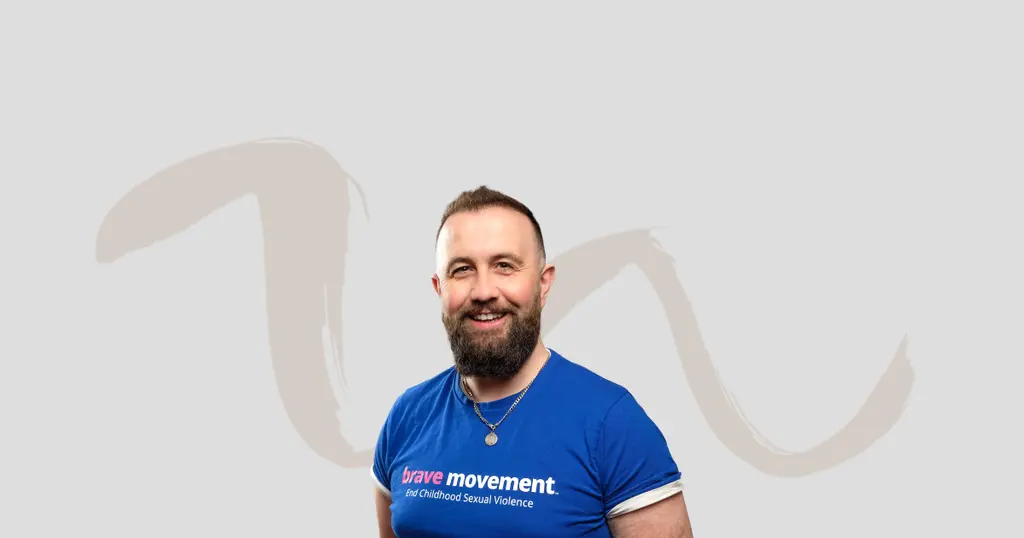
There are some people whose creativity seems boundless, and Matthew McVarish is one of them. Matthew writes music, television and theatre, and yet is always finding new ways to connect people through stories. I first heard about him through our mutual friend Paul Zeitz, who told me I needed to meet this remarkable Scottish advocate.
When we first spoke, Matthew was not entirely convinced about joining the core group that would eventually form the Brave Movement. He had already seen how easily survivors could burn out when they were expected to carry out movements without enough support.
Looking back, I cannot imagine Brave without him. Whether he is representing survivor voices before the Council of Europe, writing books that help young survivors navigate recovery, or reminding us that compassion is more powerful than anger, Matthew leads with creativity, generosity, and purpose.
Below is our conversation, in his own words.
Scottish, creative, and sensitive.
People may question whether “Scottish” is an adjective, but it is central to who I am and how I show up. I always attend international events in my national dress. Wearing my kilt says something about me before I begin speaking. There is an important difference between being a patriot and being a nationalist. A patriot loves their country; a nationalist defines that love by diminishing others. I am deeply proud to be Scottish, but I also love working internationally and connecting with people from around the world. Wearing my kilt allows me to carry Scotland into rooms where it is not always present in its own right.
Creative is probably the easiest word. I work across acting, writing and advocacy. Creativity is how I engage with and process the world. In many ways, it's helped me heal.
The final word is sensitive. I think some people see me as robust, but I actually experience the world intensely. I have ADHD, and for me, that comes with a kind of hypersensitivity. In the Council of Europe, it can help me read a room, notice what is unspoken, and understand where people may be willing to move. It can also be difficult because I remember everything and can not let things go easily. Over time, I have learned to care from that sensitivity rather than fight it.
"The thing I am proudest of is keeping a promise I made to myself. On March 24, 1996, when I was 13, I finally stood up to my uncle after years of abuse. Until then, I always froze. But that day, I found my strength, found my voice, and left."
Afterwards, I went off on a long walk and sat alone on some steps. I understood that childhood trauma could destroy my future if I did not find a way to address it. I do not know how I had that awareness at 13, but I made myself a promise: I would never let what he did to me ruin my life. I have spent the past 30 years keeping that promise.
That doesn't mean everything’s been easy. There are times when I become overwhelmed, and things may be harder for me than for someone without this history. But I continue to invest in my recovery because it is not just about me, it’s important for my whole family that I take back control of my life.
There was an extraordinary full-circle moment this year. On March 24, exactly three decades to the minute after I made that promise, I was in Strasbourg at a meeting of the Council of Europe’s Lanzarote Committee. I had just delivered an intervention calling on all governments to address the lack of services for male survivors. Thirty years earlier, I finally found my voice. Now in one of Europe’s most important policy spaces, I was using it to help millions of others.
To be honest, I almost did not. Before Brave, I had led two major international survivor initiatives. One involved walking thousands of miles across Europe to campaign for an end to statutes of limitations for childhood sexual violence. The other was the first-ever Global Survivor Forum. Both took years to complete, and after each one, I experienced severe burnout.
So, when you first approached me with the idea of an ever-expanding global survivor movement, my reaction was essentially, “No.” Then you asked me to speak with Tabitha Mpamira. Through that conversation, I began to understand that something different had already been built into the design here.
Our voices would be elevated, but within a structure focused on safety, care, and well-being. That was new and important to me. In previous initiatives, I had often been responsible for looking after other survivors, but no one was looking after me. With Brave, survivor care was not an afterthought. It was a foundational part of the Movement.
I am so glad I changed my mind.
"Before Brave, the Council of Europe had engaged with me numerous times, but it was still easy to dismiss me. Any government could think, “He’s Scottish; this has nothing to do with us.” When Brave became a global movement, that changed instantly. I was no longer speaking only as one Scottish survivor. I was representing survivors and allies across the world."
I sometimes describe Brave as a sledgehammer because I witnessed it give my voice a new weight. It also gave us a formal mechanism for participation. Through Brave, we became permanent observers to the Lanzarote Committee. Survivor leadership moved from an occasional invitation to a recognized place within the institution.
More recently, I was appointed Special Rapporteur on Gender Equality for the Lanzarote Committee. That role has deepened my understanding of what gender equality really means. Boys who experience childhood sexual violence often face significant barriers to recognition, justice, and support. Ensuring boys are seen, heard, and supported is not in competition with advocating for girls and women. It is part of the same pursuit of gender equality. We cannot end childhood sexual violence by leaving any survivors behind. One of the things I value most about the Brave Movement is that it has always brought together women, men, and gender-diverse survivors around a shared vision of prevention, healing, and justice. That is one of our collective strengths, and I know there is more we can do together to expand that vision and deepen our impact.
Brave has also helped connect my lived experience with research, evidence, and technical expertise. It was no longer only my opinion. We could place strong evidence on the table and require institutions to respond.
It has also made me feel safer. I was recently invited to give a keynote at a safeguarding conference for the Catholic Church in Scotland. That could have been an incredibly difficult space to enter, only as Matthew, or as the child I once was. Instead, I walked in as a representative of the global Brave Movement. Brave gave me both authority and protection.
"I sometimes say it feels as though survivors have our own country now. We have a shared identity and a place from which to speak together. That sense of belonging has been healing in its own right."
I don’t really do hobbies, but what brings me joy is Christmas. I absolutely love it. I have a countdown on my phone. Last week, it reached 150 days until Christmas, so I took a screenshot and sent it to everyone.
I think I love Christmas so much because my family is huge. It’s a rare occasion that we’re all together, all 26 of us in the same room. I love the noise, the warmth, and the feeling of being surrounded by people I love.
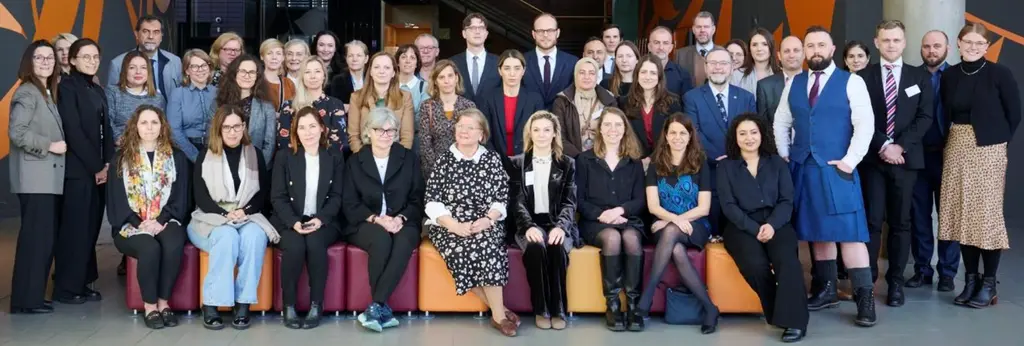
The first is a photograph of me with the Lanzarote Committee at the Council of Europe. I had spent a decade being brought into these spaces when someone wanted a survivor perspective. Suddenly, I had a permanent seat. Everyone else in the photograph represents a country. I represent survivors from all their countries. It felt like all the work I had done before Brave, and everything we had built together, had led to that moment. We found a crack in the door, I forced it open, and Brave put our foot inside. Now they cannot close it again.

The second photograph shows me addressing the United Nations during the launch of international Barnahus standards for child-friendly justice. That moment meant a great deal because I have lived experience of a deeply traumatic forensic medical examination after sexual violence. I was able to educate governments on why child-friendly systems matter, not as an abstract policy principle, but as something that can profoundly impact the child’s recovery. My lived experience was not being displayed as a story of suffering to guilt them into action. It was being repurposed as wisdom to help shape better systems.
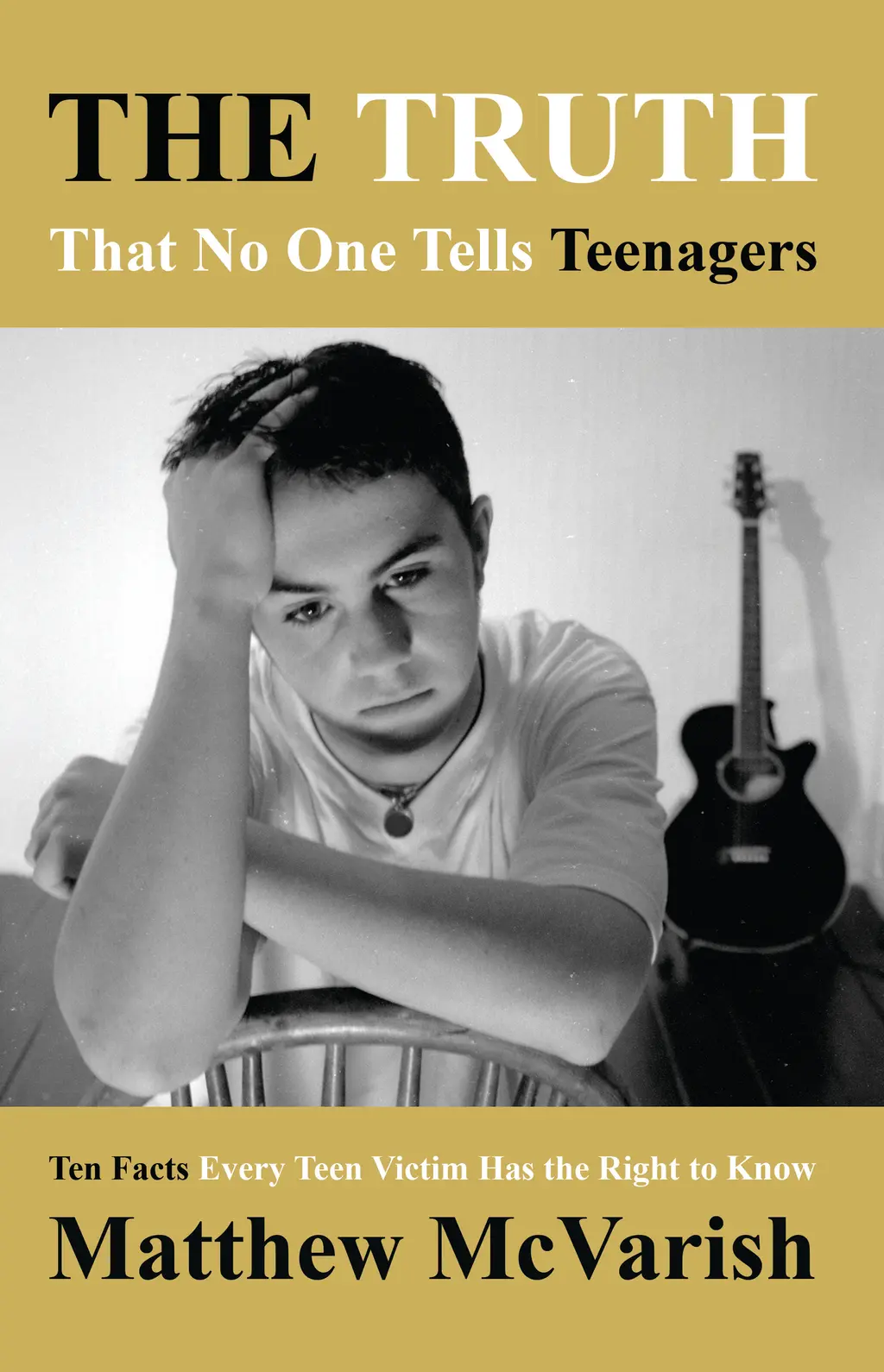
The third is a photograph of me at 15, which became the cover of my book, The Truth That No One Tells Teenagers. The book began with a letter to one child. In 2016, after I spoke on TV in Scandinavia about childhood sexual violence, a 12-year-old wrote to me through their therapist and asked, “How did you recover?” No one had asked me that before. I realized they genuinely needed the answer. So, I wrote back and explained what I had learned about recovery. The child’s therapist asked if she could remove their name from my response and share the letter with all her other young clients. My letter eventually became a book on how to navigate recovery, which is now highly recommended by child psychologists.
One thing that literally brings me hope is ‘Fix the News’. Every Thursday, it shares stories about progress around the world, like an animal that was close to extinction and is now flourishing, a country that has reduced infant mortality, or another breakthrough that rarely appears in the daily news. The media sell papers by focusing on disasters and conflicts, which can distort our understanding of reality. I try to remember that extraordinary things are happening that we simply do not hear about.
I recently attended a Joe Dispenza meditation retreat in Denver, and it reinforced something I already believed: there are just as many people moving toward nonviolence, wholeness, healing, and peace as there are people moving in the opposite direction.
I don’t believe the world is inevitably tipping toward disaster. I think millions of people are quietly choosing care and connection every day. On balance, I think we are going to be okay.
"I think our current trajectory will continue. In 4 years, we have reached members across more than 80 countries. In 10, I believe Brave will be present in every country. I also think we will continue becoming a go-to authority. The Council of Europe and various governments already ask for our perspective because they increasingly understand that survivors hold expertise."
In 10 years, survivor leadership will be built into national and international systems. Survivor councils will help shape government policy and ensure decisions are informed by the people most affected. By then, Brave will be part of the furniture of global institutions.
More importantly, I think Brave will help create a cultural shift. There was a time when people could barely speak openly about cancer. Today, football players wear pink to raise awareness of breast cancer. Brave can help create that same transformation around childhood sexual violence; make it safer to speak, reduce stigma, and ensure silence is no longer the default.
"Put on your own oxygen mask before helping the person next to you."
Anyone who has read this far is probably interested in advocacy or finding a way to contribute. That’s wonderful. But I think we all need to ask what is driving us to want to change the world.
Many people come into this work as wounded warriors; trying to change a law, reform an institution, or fix the world because stopping to address their own pain feels too difficult. I understand that because I did it too. I once walked across Europe. Who does that? Looking back, I can see that I was going a very long way, literally, to prove that my life had value. My childhood had not helped me understand that.
Survivors have every right to be angry, but anger can only carry us so far. It’s a powerful emotion that can drive us to take action, but it kind of feels like it pushes us along from behind. Fueled by anger alone, if we hit an obstacle, we get crushed. Compassion is a very different energy. It seems to pull us forward, and so when we’re compelled to act from a place of compassion, not anger, we’re more fluid. When we hit an obstacle, like water, compassion finds a way around. We don’t get crushed every time. That does not mean we become less bold or stop demanding accountability. It means our advocacy is rooted in something sustainable. So, put on your own oxygen mask. Healing yourself first is not selfish. It is what allows you to stay, to lead, and to help build a world in which others can heal too.
Stay tuned for more interviews with our co-founders as we continue to spotlight the power of survivor leadership in the Brave Movement.